
Self-harm and self-injury refer to behaviors in which an individual intentionally inflicts harm on themselves. Most common among teens and young adults, these behaviors may include burning, hair pulling, and cutting. Self-injury often co-occurs with other mental health conditions and may be used as coping mechanism by individuals that have experienced trauma.
Self-Injury Awareness Month is an important time to highlight the prevalence of self-harm within our communities, reduce stigma, and promote compassion and understanding for individuals who engage in this behavior.
Source: www.nami.org
Tips for supporting a patient who engages in self-harm:
- Demonstrate listening and empathy.
- Remain non- judgmental.
- Avoid using stigmatizing language such as referring to self-harming behavior as “attention-seeking.”
- Provide resources and educational materials related to self-harm.
- Help the patient to identify alternative, healthier coping strategies and encourage use of same when experiencing urges to self-harm.
- Suggest developing a safety plan: what they might do to keep themselves safe, identifying triggers, and who they can reach out to, etc., instead of self-harming.
- Continually monitor and assess the severity of a patient’s self-harm and their risk for suicide.
Source: mentalhealthfirstaid.org
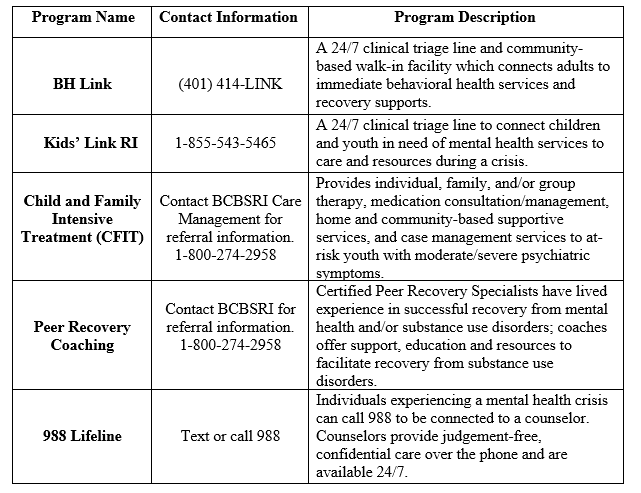
Resources:
For additional information, please contact Isabella Faggiano at Isabella.faggiano@bcbsri.org.